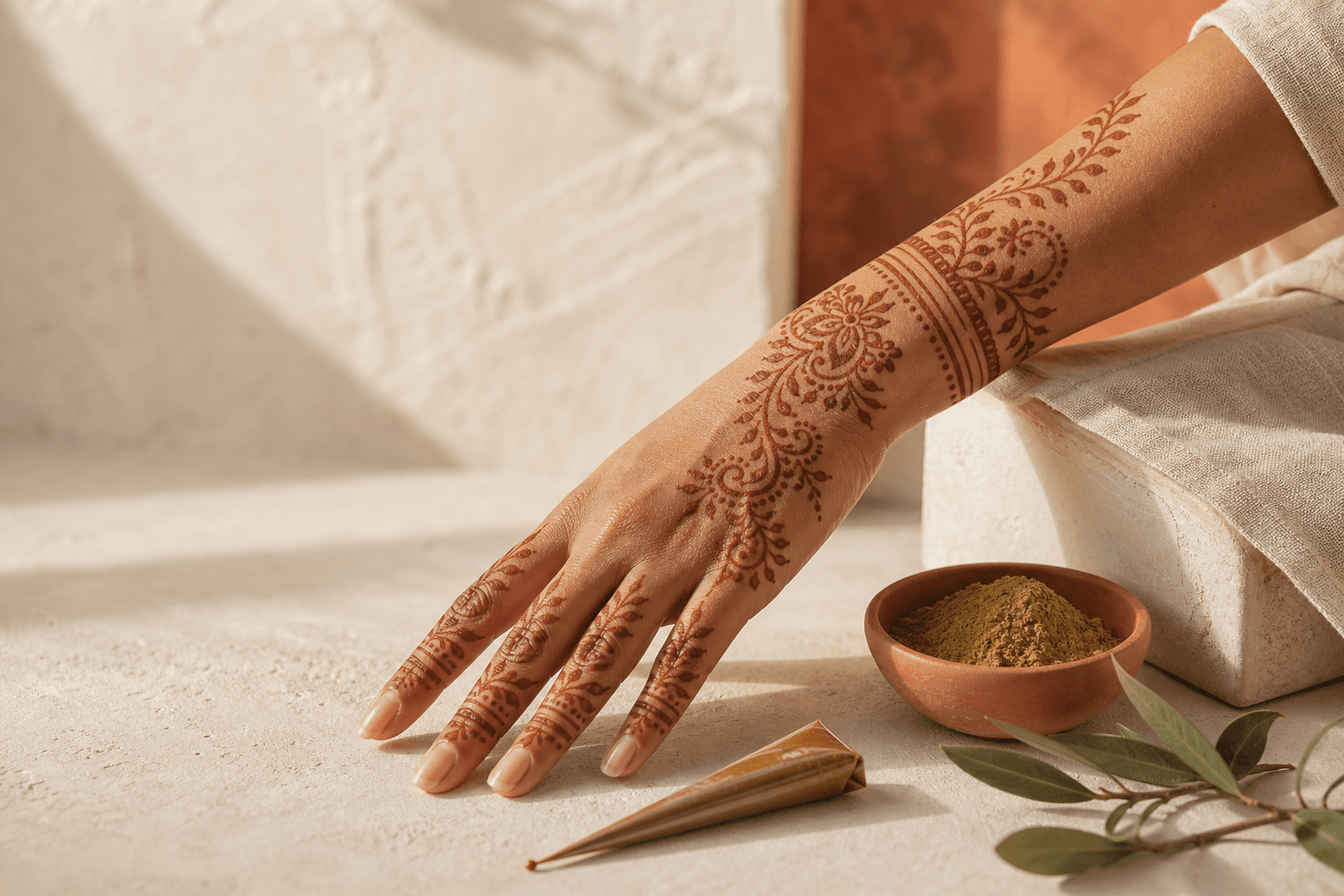
Natural henna and products marketed as “black henna” are not interchangeable. The most useful difference is not the design on the package; it is the combination of ingredients, paste color, stain-development time, and the final color on skin.
Pure henna comes from the powdered leaves of Lawsonia inermis. In body art, a prepared paste is placed on the outer skin and later removed. The first visible stain is normally orange. It then develops toward brown or reddish-brown rather than appearing jet black immediately.
A product sold as black henna may contain extra colorants intended to make the result darker or faster. The U.S. Food and Drug Administration says the added ingredient used to blacken henna is often a coal-tar hair dye containing p-phenylenediamine, usually called PPD. PPD can cause dangerous skin reactions in some people and is not permitted by U.S. law in cosmetics intended for application to the skin.
The quick comparison
- Natural henna: commonly greenish-brown paste, an orange stain when the paste is first removed, and gradual development toward brown or reddish-brown.
- A suspicious “black henna” product: may promise a jet-black result, an unusually fast stain, or a long-lasting result without explaining the ingredients.
- Jagua: a different botanical body-art colorant that can develop blue-black. It is not henna, and a blue-black color alone does not tell you what is in a finished product.
Color is a warning signal, not a complete ingredient test. The FDA notes that even products marketed in brown shades can contain ingredients intended to darken the stain or make it last longer. Read the full label and ask direct questions.
Seven checks before application
1. Ask for the complete ingredient list
Do not accept “henna,” “natural,” or “herbal” as a complete answer. Ask for every ingredient in the finished paste, including liquids, oils, preservatives, colorants, and any ingredient added by the artist after purchase.
Retail cosmetics in the United States generally must carry an ingredient declaration. Rules differ by country and by how a product is supplied, so the absence of a list should lead to more questions, not an assumption of safety.
2. Treat instant-black claims as a red flag
Natural henna is known for an orange-to-brown stain. A seller promising a pitch-black henna result in minutes should be able to identify the ingredient responsible for that color. If the explanation is vague, do not use the product.
3. Check who made and sold it
Look for the manufacturer or responsible seller, country of origin, batch or lot information, production or expiry date, storage instructions, and a way to report a problem. A decorative cone with no traceable business information gives you little help if something goes wrong.
4. Ask the artist what is inside the cone
Professional use does not guarantee that a product has been independently checked. The FDA explains that ingredient-declaration requirements may not apply in the same way to samples or products used only by professionals. Ask the artist to show the original label or supplier information.
5. Do not rely on smell, packaging, or a “chemical-free” claim
Fragrance can mask other ingredients. Green foil is not proof of fresh henna. “Chemical-free” has no useful literal meaning because every substance is made of chemicals. Specific, complete disclosure is more valuable than reassuring marketing language.
6. Know when to stop
If an application causes burning, intense itching, swelling, blistering, or rapidly worsening discomfort, stop. Remove the product as directed, preserve its packaging and ingredient information, and seek appropriate medical advice. Urgent symptoms such as breathing difficulty require emergency help.
7. Keep the product details
Photograph the front and back of the package, batch code, ingredient list, and seller details before use. This record can help a clinician or regulator understand a reaction and helps marketplaces investigate a listing.
Can a patch test prove henna is safe?
No single home test can guarantee that a finished product will not cause a reaction. Follow the manufacturer’s directions and warnings. If you have a history of skin reactions, allergies, eczema, or a previous reaction to hair dye or a temporary tattoo, ask a qualified healthcare professional before use.
Importantly, a prior black-henna tattoo can matter later. Health guidance warns that exposure to PPD through a black-henna tattoo may increase the risk of an allergic reaction during later exposure to PPD-containing hair dye.
What Henna1st expects from listings
Henna1st prioritizes traceable sellers, complete ingredient disclosure, realistic color claims, batch and date information, storage directions, and visible warnings. The marketplace prohibits PPD body-art products and mystery pastes. Verification supports transparency; it does not replace medical advice or guarantee that every individual will tolerate a product.
Before buying, use the ingredient guides and safety guides, then compare clearly described products in natural henna.
Frequently asked questions
What color is natural henna?
Natural henna generally starts orange after paste removal and develops toward brown or reddish-brown. The exact depth varies by paste, skin location, temperature, contact time, and individual skin.
Does black henna always contain PPD?
Not every dark temporary body-art product has the same formula, but products marketed as black henna may contain PPD or other added colorants. The only reliable approach is complete ingredient disclosure from a traceable source.
Is jagua the same as black henna?
No. Jagua and henna come from different plants. Finished jagua products can contain additional ingredients, so buyers should still read the complete label and follow the product directions.
What should I do if temporary body art burns or blisters?
Stop using the product, remove it as directed, keep the packaging and ingredient information, and seek medical advice. Breathing difficulty or other severe symptoms require urgent emergency help.