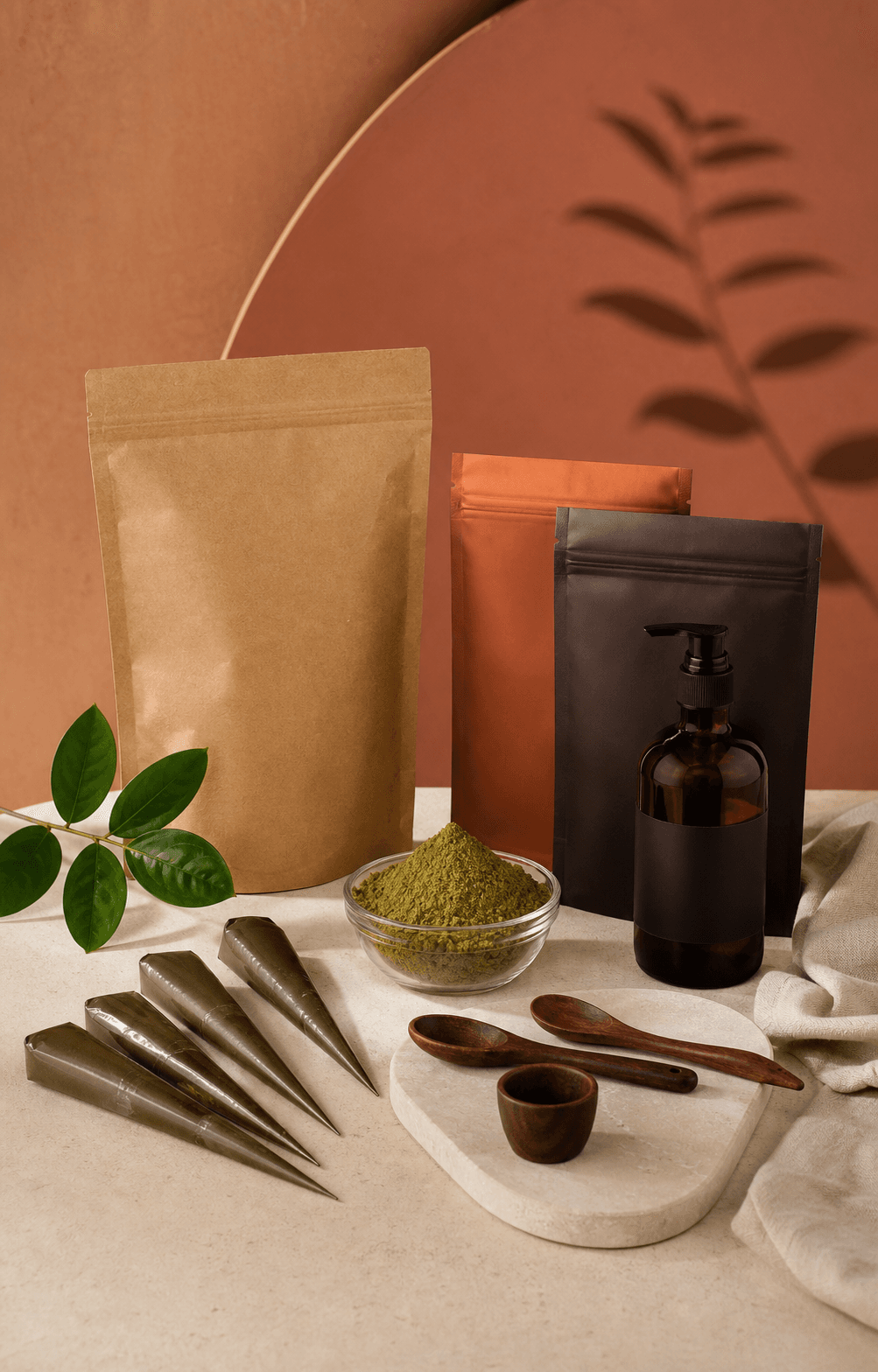
Choose henna powder when you want control over the recipe, consistency, and batch size—and you are prepared to mix, rest, strain, fill, label, and store the paste correctly. Choose premixed cones when convenience and immediate application matter more, provided the seller discloses every ingredient, date, batch, and storage requirement.
Neither format is automatically fresher, safer, darker, or more “natural.” Powder and cones describe how the product is supplied, not everything inside it.
What you are actually buying
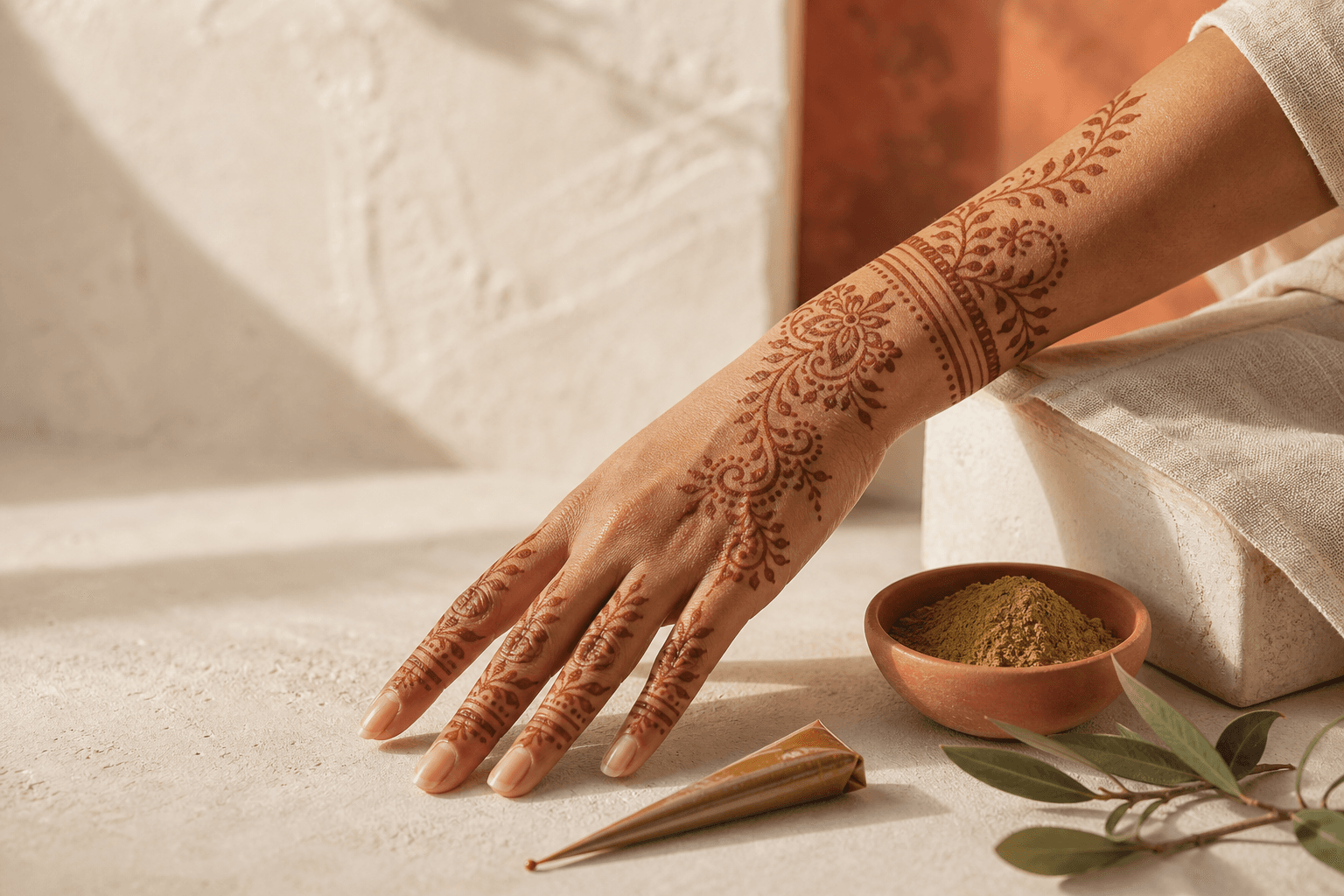
Henna powder is dried, milled Lawsonia inermis leaf sold for later mixing. A body-art user combines it with liquid and other chosen ingredients to create a workable paste.
A premixed cone contains a finished paste in an applicator. It may be handmade by an artist, produced by a specialist supplier, frozen after preparation, refrigerated, or formulated for shelf storage.
The word “cone” tells you the package shape, not the formula. A cone can contain clearly disclosed natural-henna paste, an undisclosed mixture, or a product with added colorants and preservatives. The FDA warns that products marketed as henna—including some brown products—may include ingredients intended to darken the stain or make it last longer.
Quick comparison
- Ingredient control: powder gives the mixer more control; cones depend on the seller’s disclosure.
- Convenience: cones are ready to apply; powder requires preparation and tools.
- Consistency: a reputable cone can be predictable; powder lets experienced users tune texture for their technique.
- Batch size: powder suits custom batches; cones make it easy to open only what you need.
- Storage: both require labelled conditions; prepared paste is generally more time- and temperature-sensitive.
- Skill: powder has a steeper preparation curve; cones reduce setup but not application skill.
- Traceability: either format should identify the responsible seller, batch, date, and directions.
Ingredients and transparency
For powder, the label should identify the plant material, responsible business, net weight, country of origin where required, batch or lot, and relevant dates and storage directions. Ask whether the powder is intended for hair or body-art mixing and whether anything else has been blended into it.
For cones, request the complete finished-paste ingredients: powder, liquids, oils, sweeteners or texture ingredients, preservatives, and any colorants. “Henna,” “herbal,” or “natural oils” is not a complete declaration.
Retail cosmetics in the United States generally require an ingredient declaration. Regulations differ by location and intended use, but a transparent seller should still answer a basic formula question.
Freshness and storage
Powder is easier to store before mixing when it is kept in suitable sealed conditions according to the supplier. Once mixed, the paste has a different handling window.
Premixed natural-henna cones are often sold chilled or frozen. The listing should explain the temperature, preparation or manufacture date, use-by date, thawing method, time available after thawing, and whether refreezing is recommended.
Do not assume a green foil cone is fresh. A 2025 UK recall involved a green-foil henna cone with excess phenol, demonstrating that package style cannot establish composition or safety. Check the exact brand, batch, identifiers, and current recall information.
Shelf-stable cones need a complete ingredient list and credible explanation of their storage conditions. “No refrigeration needed” is a handling claim, not proof of quality.
Cost, waste, and skill
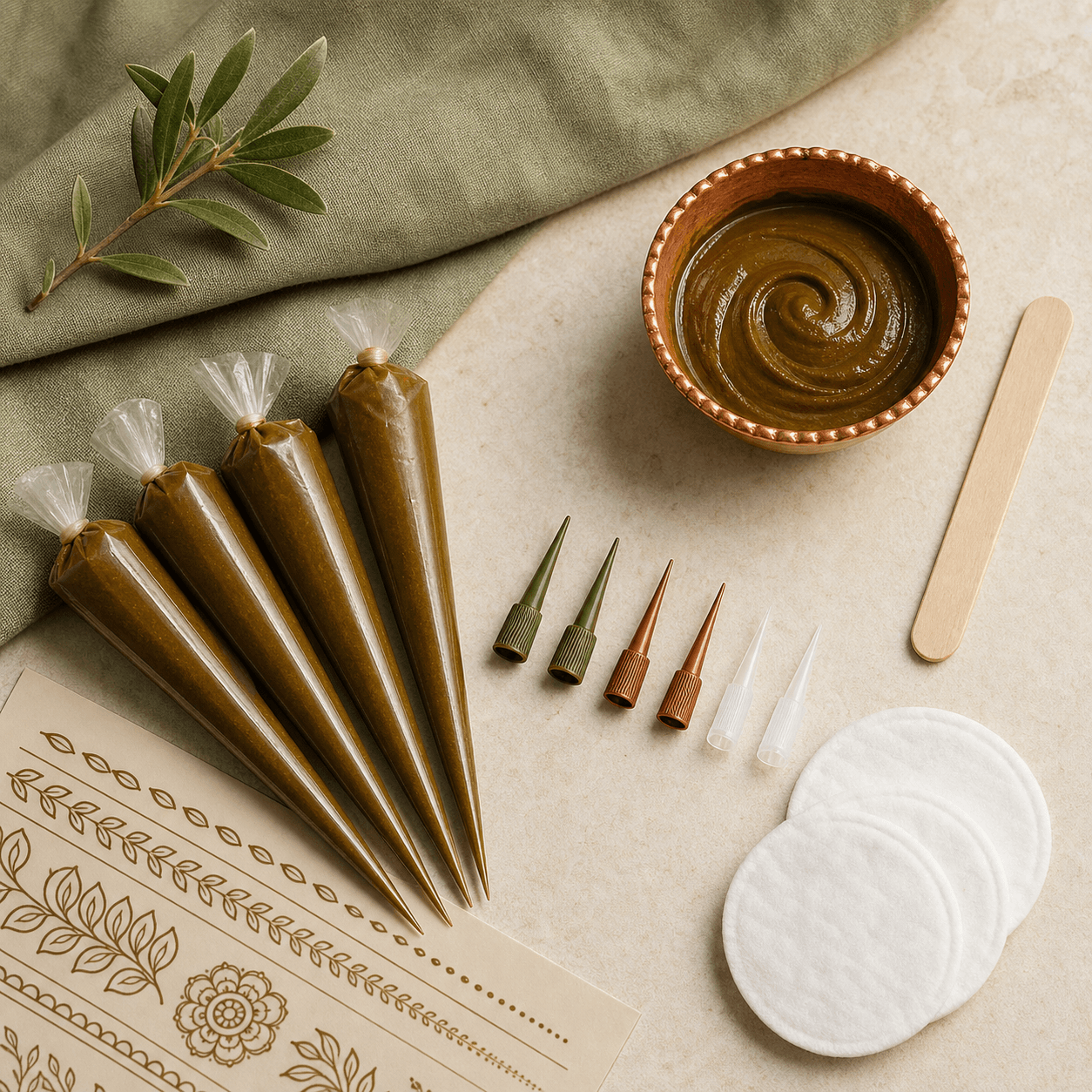
Powder can be economical for working artists and frequent users who mix reliable batches. The real cost includes liquids, oils, mixing bowls, scales, strainers, applicators, labels, freezer space, preparation time, and discarded test batches.
Premixed cones shift much of that preparation to the seller. They can reduce waste for an occasional user who needs only one or two cones. They can also cost more per gram and may be vulnerable to shipping delays or temperature exposure.
Compare net weight, not just cone count. “Large” and “professional” are not standard quantities. Ask whether the nozzle is pre-cut and whether the listed weight includes packaging.
Mixing powder well is a practical skill. Texture that is too thick can be hard to apply; texture that is too thin can spread. Poor straining can block fine tips. New users should expect practice rather than assuming a premium powder guarantees professional lines.
Which format fits your use?
Choose powder when
- You mix regularly and understand the complete preparation process.
- You want to select every added ingredient.
- You need to adjust consistency for fine lines, bold work, or different applicators.
- You can label, portion, and store batches reliably.
- You need enough paste for multiple clients or a large event.
Choose premixed cones when
- You need a small, ready-to-apply quantity.
- The seller provides complete ingredients and traceable batch details.
- Shipping and storage instructions are specific and practical.
- You prefer to spend time practicing application rather than mixing.
- You can use the cone within its labelled handling window.
Questions to ask before ordering
- What are the complete ingredients?
- Who manufactured or mixed the product?
- What is the batch or lot code?
- When was it produced, mixed, or packed?
- What are the unopened and opened storage conditions?
- How is temperature-sensitive paste shipped?
- What color and development time are realistically expected?
- What directions and warnings apply?
- What is the net quantity?
- What happens if the product arrives warm, damaged, unlabelled, or different from the listing?
Save the listing and photograph the packaging when it arrives. Traceable information matters if there is a quality problem, reaction, or recall.
Safety language to treat cautiously
Avoid products promising “zero allergy,” “chemical-free,” an immediate jet-black natural-henna stain, or a guaranteed duration. Natural is not the same as risk-free, and tolerance varies.
If burning, intense itching, swelling, blistering, or another concerning reaction begins, stop using the product, remove it as directed, keep the packaging, and seek appropriate medical advice. Severe symptoms require urgent help.
Use the online henna-cone checklist, compare natural and black henna, or explore henna products before ordering.
Frequently asked questions
Is henna powder better than premixed cones?
It depends on your use. Powder offers recipe and batch control but requires mixing skill and equipment. Cones offer convenience but depend heavily on complete seller disclosure, freshness, shipping, and storage.
Are premixed henna cones natural?
Some are clearly disclosed natural-henna pastes; others contain additional or undisclosed ingredients. Read the complete formula rather than relying on the word natural or the cone’s color.
Does henna powder last longer than cones?
Powder and finished paste have different storage needs, and longevity depends on the formula, packaging, temperature, dates, and supplier directions. Follow the specific label rather than a universal rule.
What should I check on a henna powder label?
Check the plant identity, complete contents, responsible seller, net weight, batch or lot, origin information where required, dates, intended use, storage directions, and warnings.